Offer valid for
For the first time online
Turn Any Plant Into Your First Bonsai in a Single Afternoon
Even if you've never cared for a plant before.
Bonsai is more than just a tree.
It's a 1,500-year-old Japanese art of patience, calm, and sculpting with your own hands.
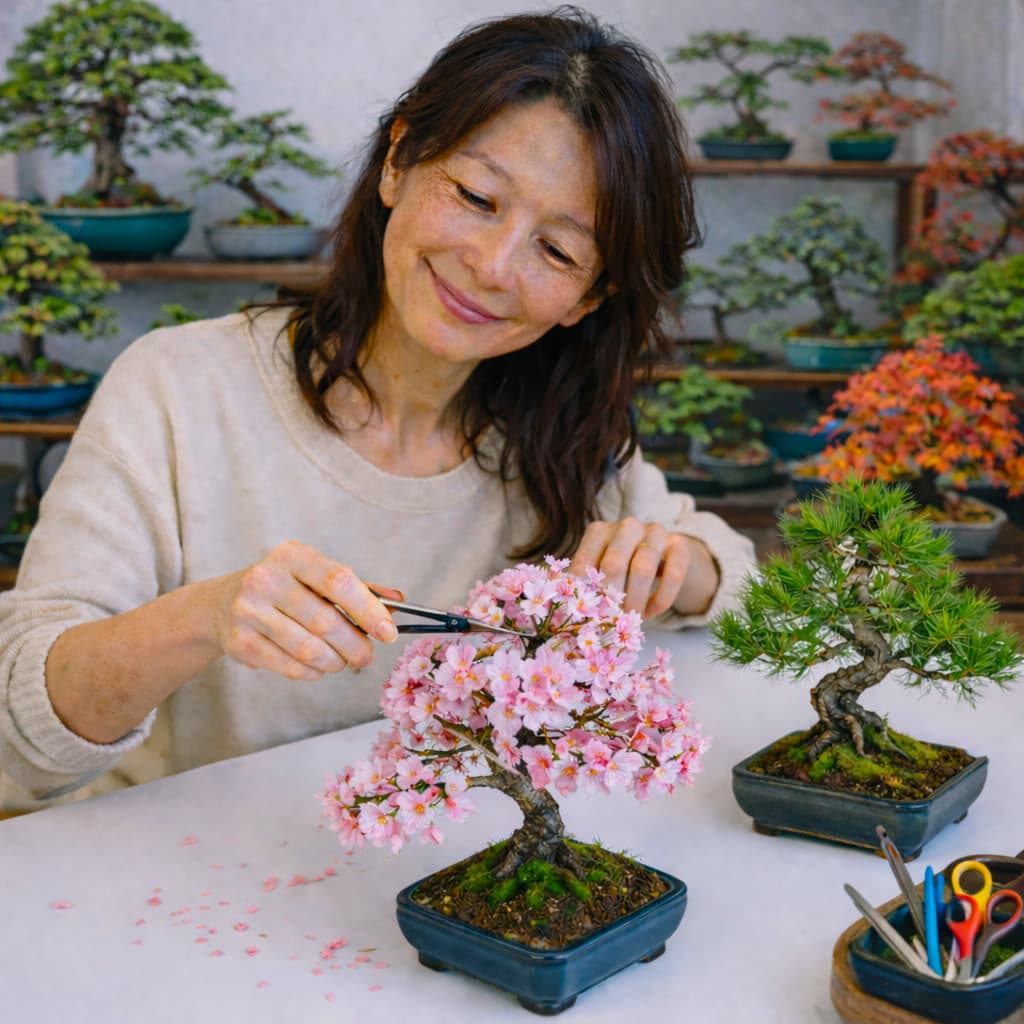
Bonsai is more than just a tree.
It's a 1,500-year-old Japanese art of patience, calm, and sculpting with your own hands.
Difference between buying a plant and making one.
Everyone has a plant on their shelf. Nobody remembers it.
But bonsai? People stop. They stare. They ask how you did it.
It's the kind of hobby that says something about you before you even open your mouth.
Creative. Intentional. Different.
Not everyone has one. That's the point.
And there's the part no one expects.
You sit down to shape your tree.
Ten minutes in, you realize you haven't thought about work, your phone, or anything else.
The Japanese have known this for 1,500 years.
Bonsai doesn't just look good on your shelf. It shuts off the noise in your head.
Not because you're meditating. Because your hands are too busy creating something beautiful to let your brain spiral.
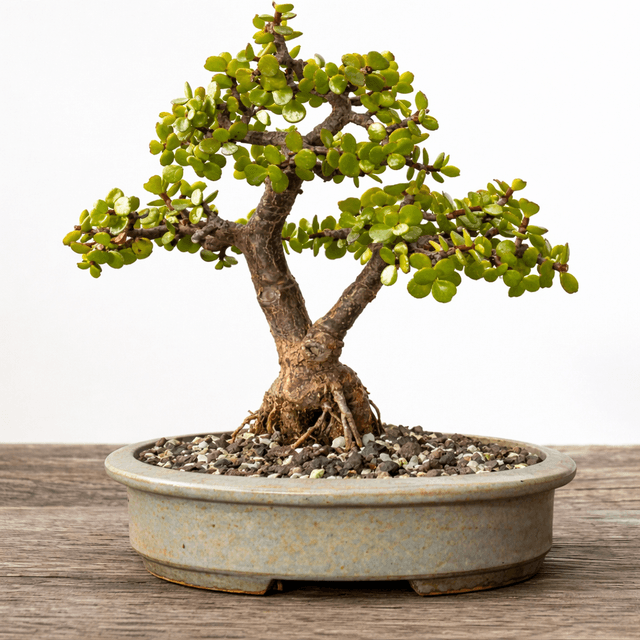
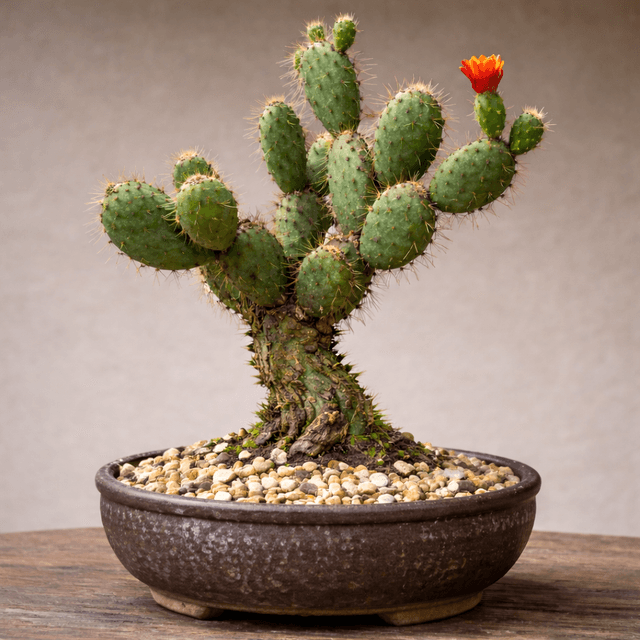
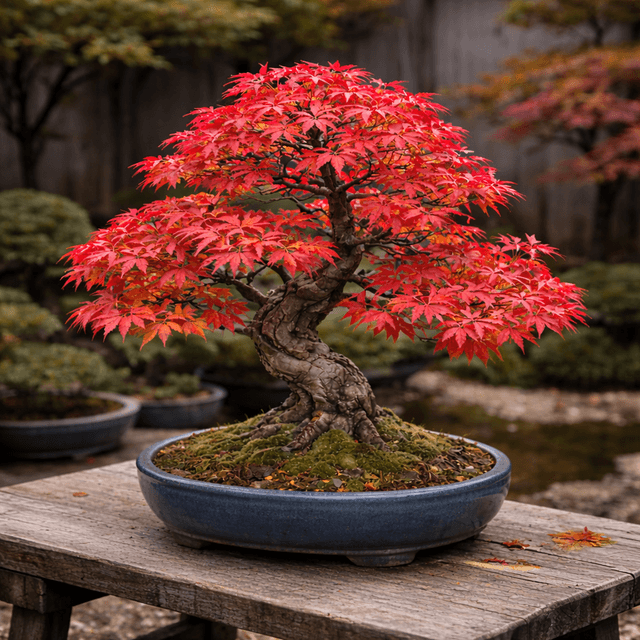
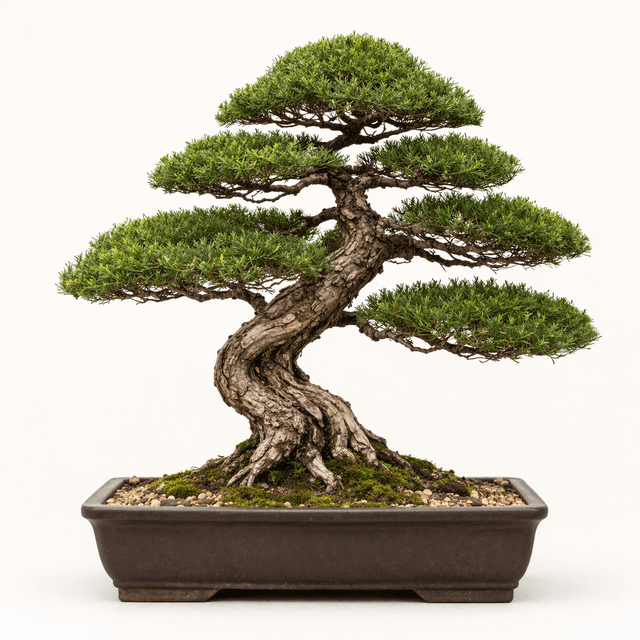
"It takes years to see results. I'm too impatient."
Your FIRST pruning session transforms a bushy plant into something that's clearly a bonsai.
That happens in one afternoon. Not one decade.
The "holy cow, I made that" moment? That's day one.
Every week, your tree shows you something new. A bud where you pruned. A branch holding the angle you wired.
"Isn't this an expensive hobby?"
Your first bonsai costs less than lunch.
A starter tree is $12-15. Shears and wire cost under $20.
That's it. No $200 specimen. No Japanese tool kit.
The course teaches you how to spot hidden gems at any nursery.
Anyone can do Bonsai.
→ Even if you've never cared for a plant before. A simple step-by-step method that works on any tree, any skill level.
→ Even if you think bonsai is too hard. People will stare at yours. That's the point.
→ Even if you don't think of yourself as "creative." A tree, a pair of shears, and 20 minutes. That's it.
The Philosophy Behind the Practice
Bonsai carries four Japanese principles that quietly change how you see the world and yourself.
The crooked trunk, the asymmetric branch, the scar where you pruned too hard. These aren't flaws. They're character.
There is no "finished" in bonsai. Your tree will never be "done." It grows. You grow. That's the point.
What you remove matters more than what you keep. The empty space between branches gives the tree its shape.
Some mornings you'll check your tree before you check your phone. A new bud where you pruned. A branch holding the angle you wired. That's your ikigai.
Why I'm Teaching This Online For The First Time
Most people aren't able to spend thousands of dollars to travel to Japan any time soon.
They'll never sit in a studio with a master.
Never experience the meditative practice of doing bonsai.
People started asking me to teach them. One of my first students wrote:
"I struggle with anxiety, and bonsai is the only thing that helps me stay in the present."
That's when I knew I had to share this.
Not just the technique, but the philosophy. The meditation. The meaning.
I put everything I've learned into this course. The exact techniques, the philosophy, the materials that cost under $30, not $200 or more. Everything you need to start your first bonsai.
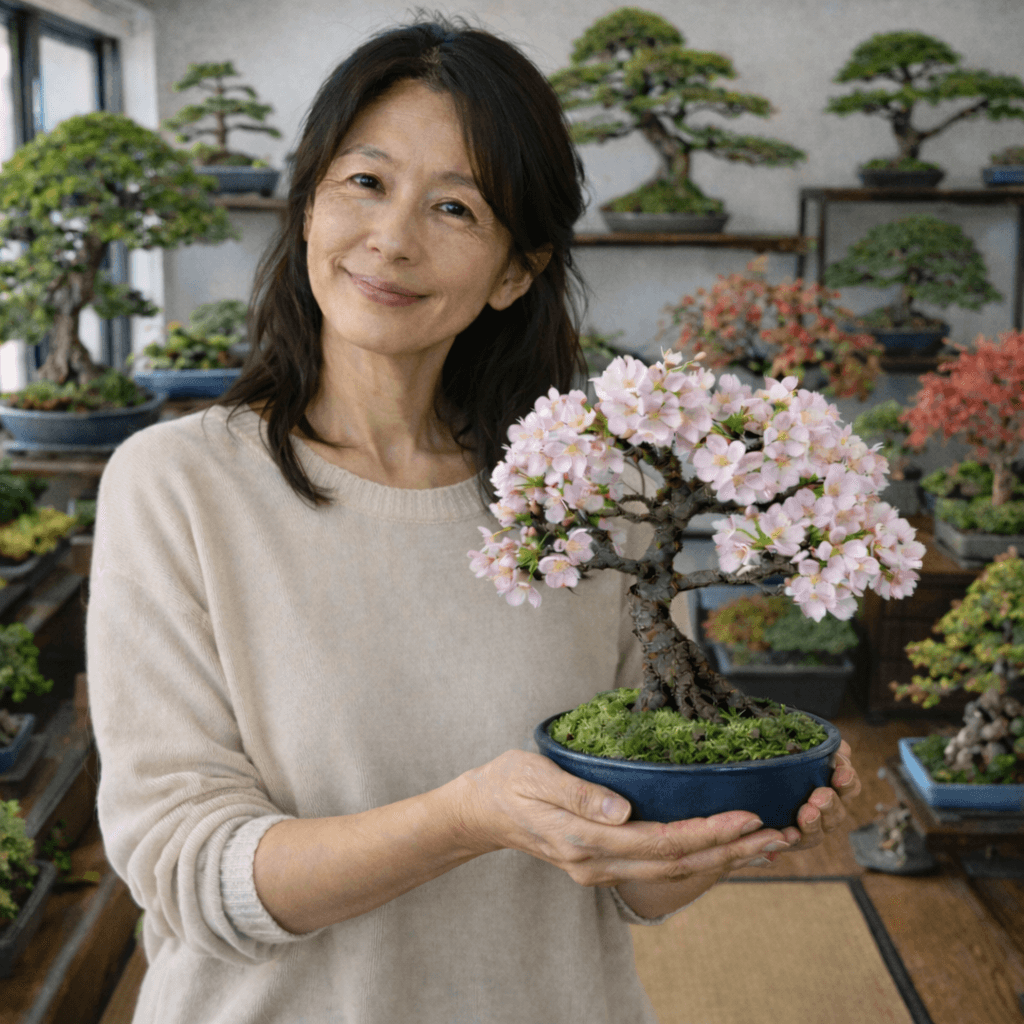
My name is Keiko Murakami (村上恵子).
I've spent more than 20 years studying bonsai. Not just the technique, but the philosophy behind it.
I've learned from Japanese masters whose trees have been displayed at the Imperial Palace.
What struck me wasn't only the craft.
It was watching people's faces when they made their first cut.
Introducing: The Bonsai
Masterclass
盆栽の道: the way of the tray-planted tree
✦ What's Inside ✦
Introduction to the Bonsai Philosophy
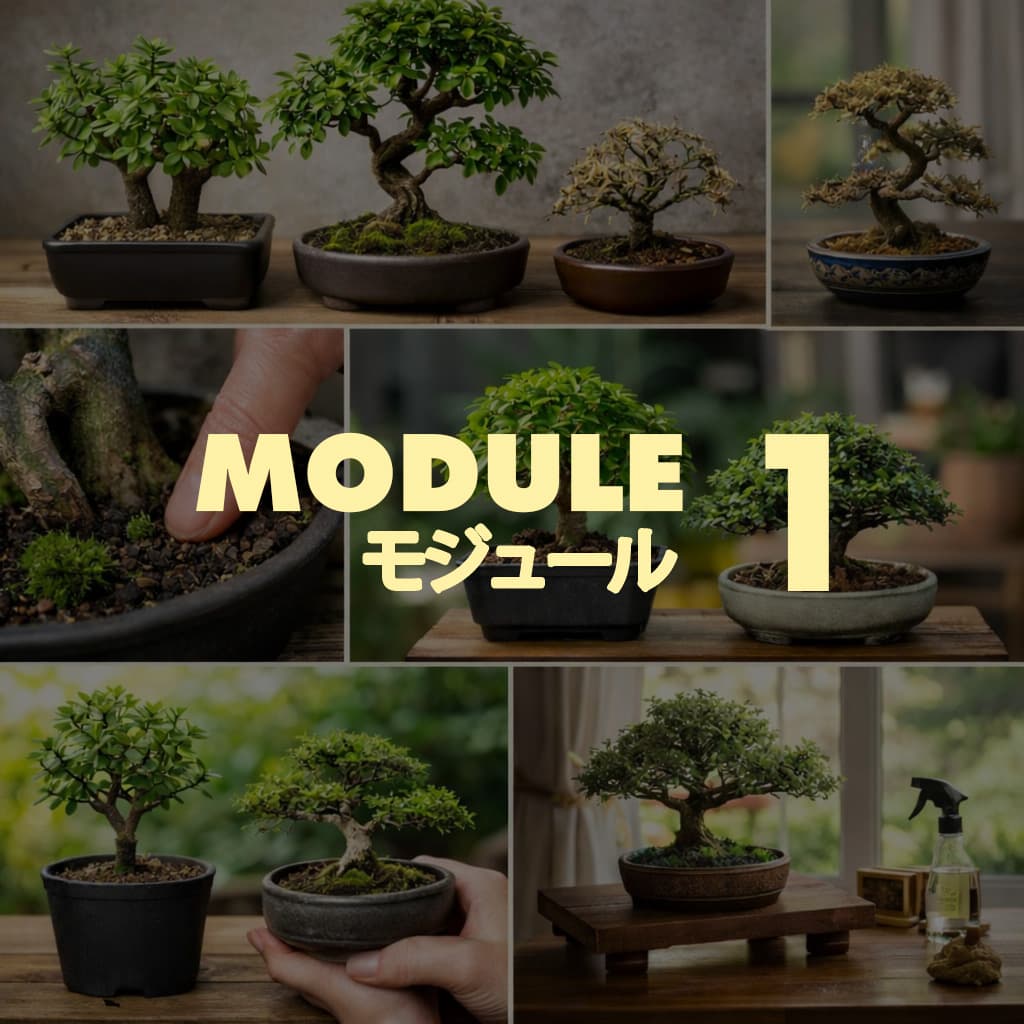
- ✦ The four Japanese philosophies (Wabi-Sabi, Shokunin, Ma, Ikigai) that turn bonsai from a hobby into a lifelong practice
- ✦ Why bonsai is the most effective stress-relief practice you've never tried — and the science behind it
- ✦ How to approach your first tree with the right mindset so you enjoy the process instead of stressing over perfection
- ✦ The history of bonsai — from 1,500-year-old Japanese monasteries to your living room
Tree Selection and Supplies
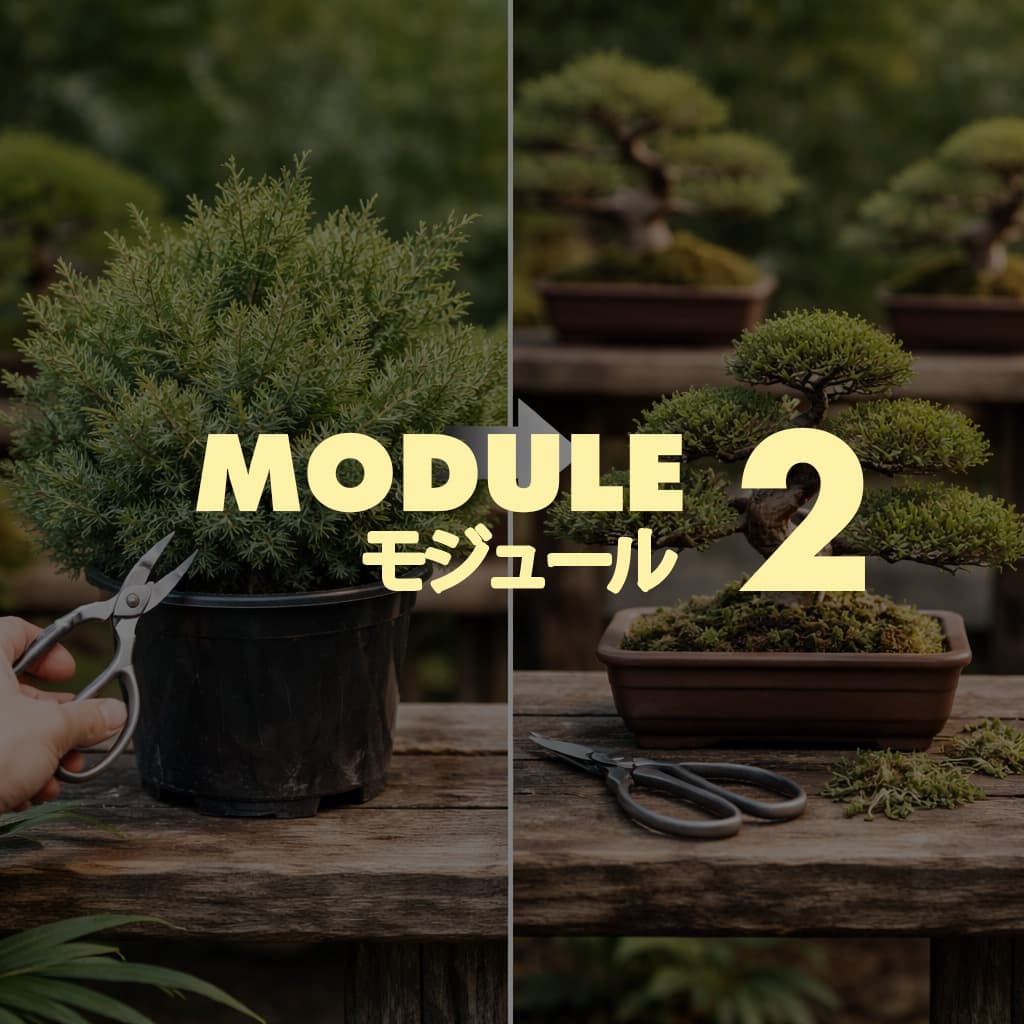
- ✦ The exact tools you need to start (and the ones you don't) — what to buy, where to buy it, and what's a waste of money. Plus exactly which tree to get and where to find it
- ✦ The 3 species that are nearly impossible to kill and the 2 "beginner" species that actually aren't (one is the most commonly recommended tree on the internet)
- ✦ The watering test that takes 2 seconds that prevents 90% of bonsai deaths
- ✦ Indoor vs outdoor: the decision that determines everything. Get this wrong and your tree is dead in 3 months no matter what else you do
Pruning & Shaping: Your First Transformation
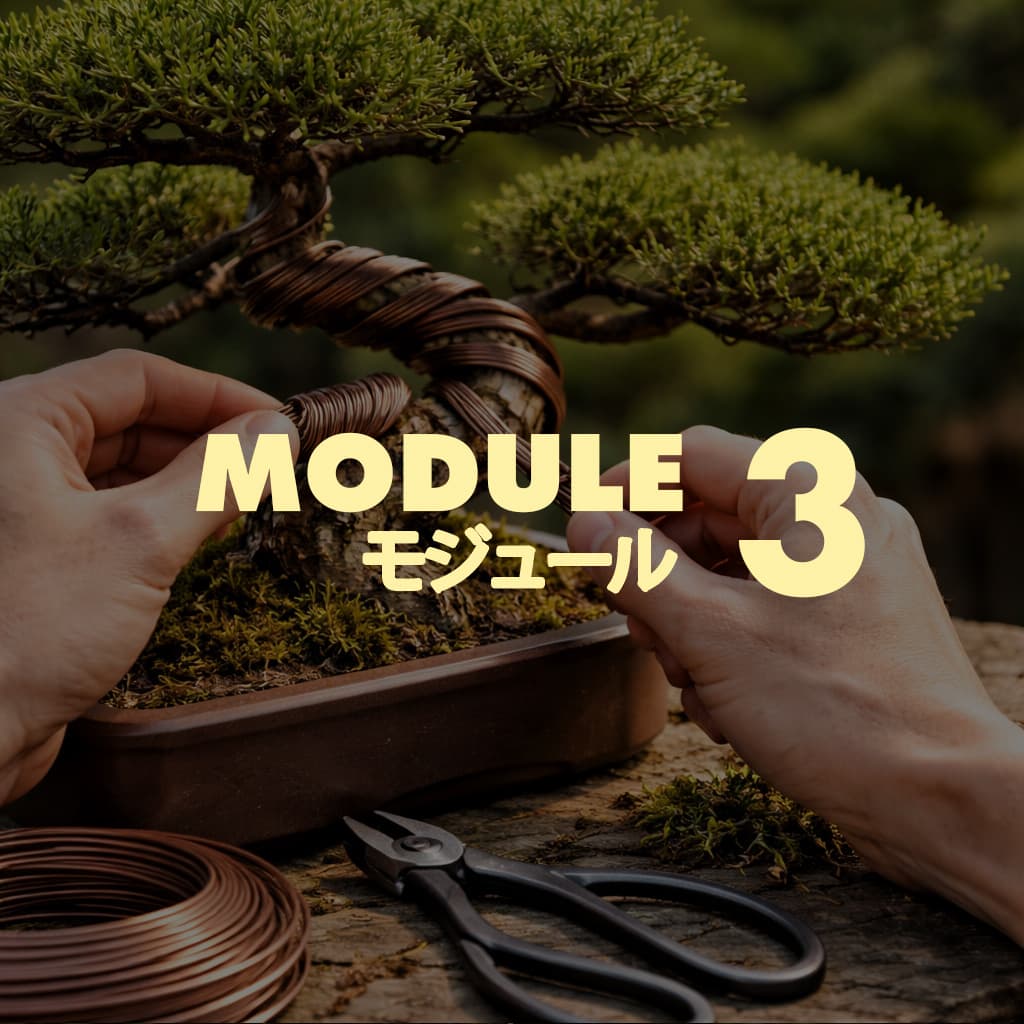
- ✦ How to see the "tree inside the bush" and visualize the finished tree before you make a single cut
- ✦ Your first before-and-after transformation with 3-5 cuts that turn overgrown nursery stock into something people recognize as a bonsai
- ✦ The one pruning mistake 80% of beginners make that stunts growth for an entire season (and the simple fix)
- ✦ Maintenance pruning in 2 minutes flat to keep your bonsai looking intentional, not wild
Wiring: The Art of Bending Branches
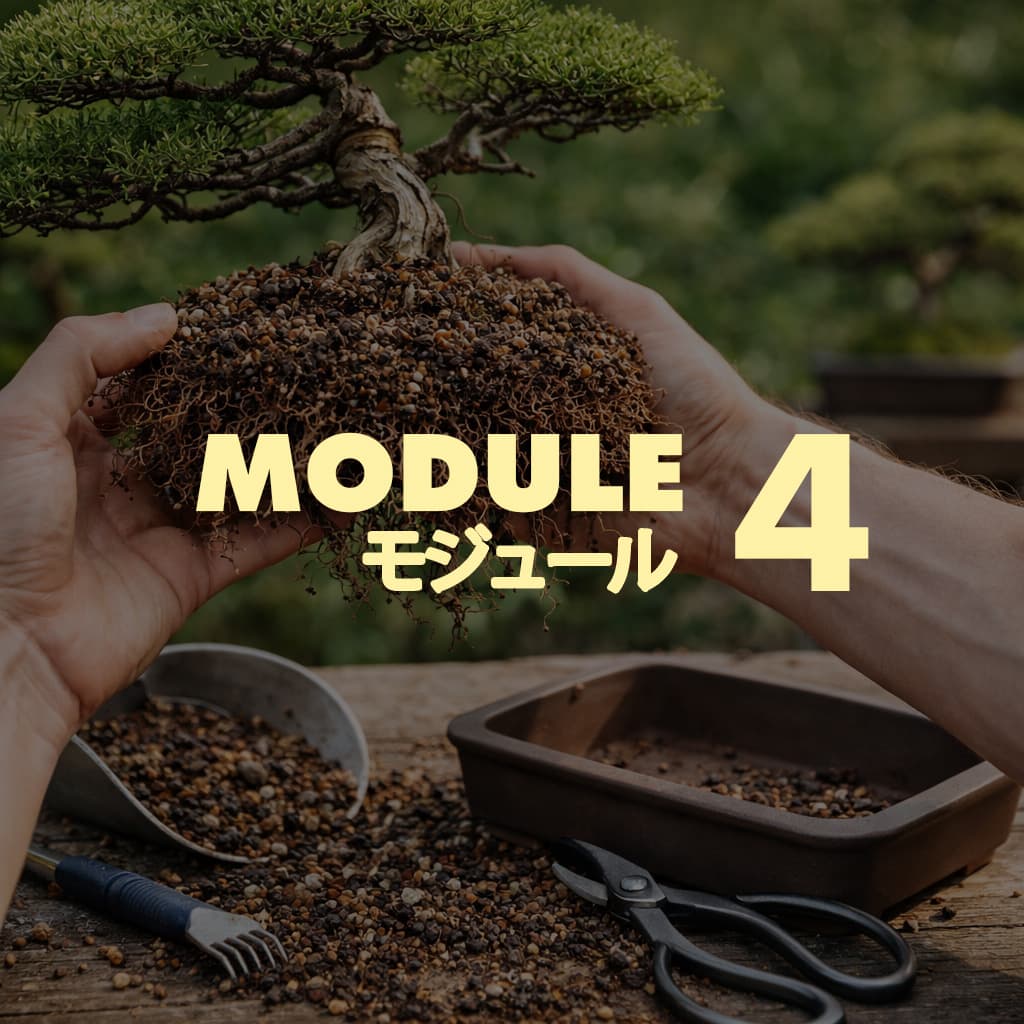
- ✦ How to bend a branch without snapping it using the pressure-and-patience technique
- ✦ Choosing the right wire gauge for each branch (too thin = useless, too thick = permanent scars)
- ✦ The wire-scar mistake that permanently damages bark and the exact timeline for when to remove wire
- ✦ Create the illusion of 100 years of wind and weather on a tree that's 3 years old
Repotting, Soil & Root Health
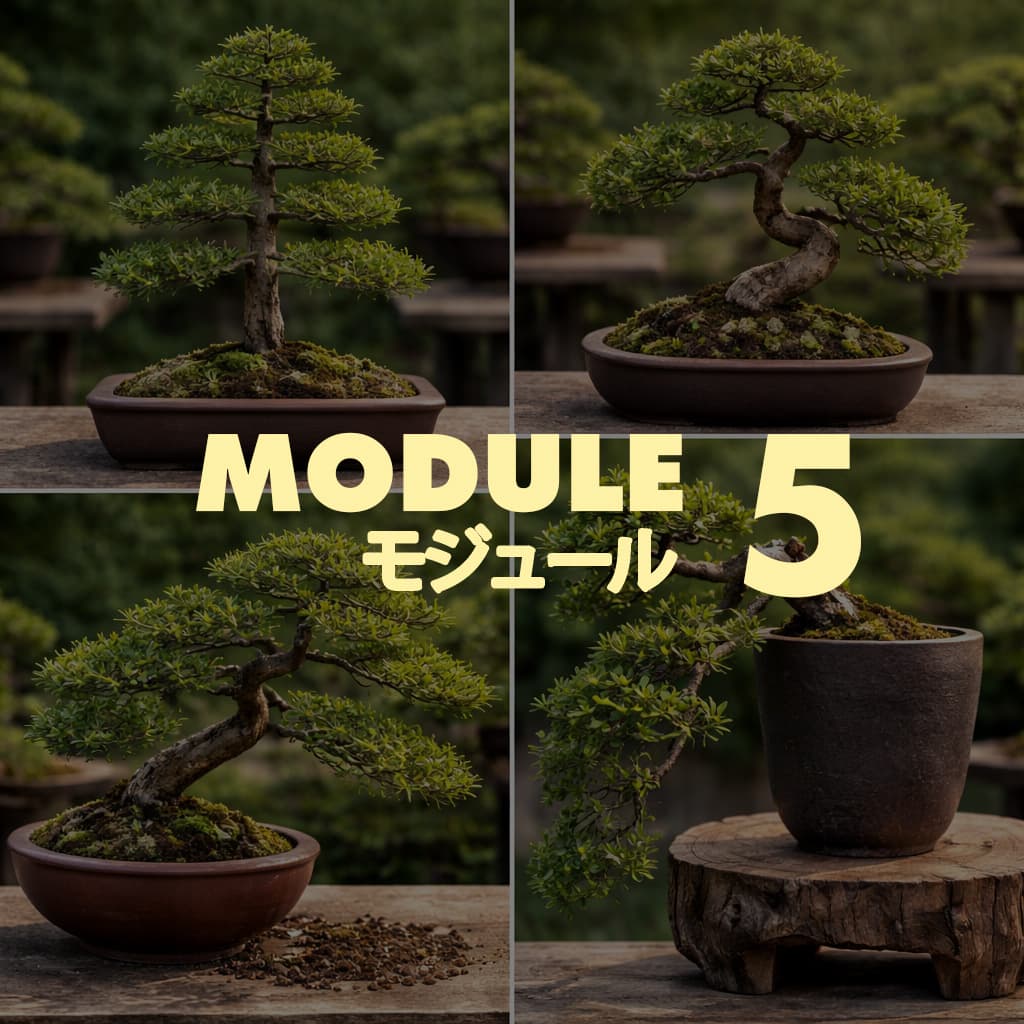
- ✦ Why regular potting soil will kill your bonsai within a year and the $5 soil mix that professionals use
- ✦ Root pruning demystified: the technique that sounds terrifying but is actually the secret to keeping trees small AND healthy for decades
- ✦ The signs your tree is screaming for a repot that most beginners miss until it's too late
- ✦ Choosing the right pot size and style with the proportion rules that make everything click
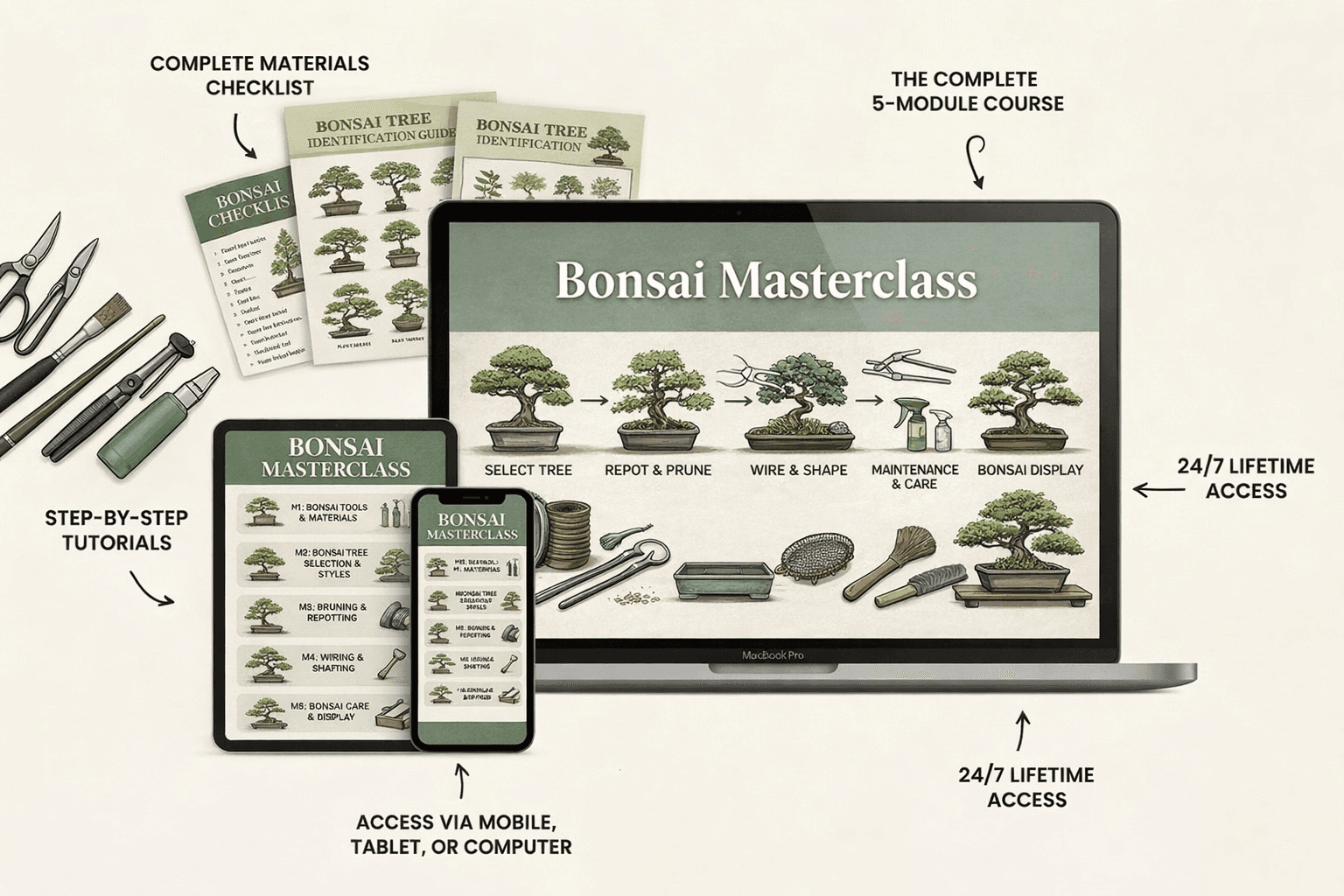
You've seen what's inside. Five modules. A complete system for choosing, styling, and caring for bonsai trees at home.
The full price for this course is $97.
You're not going to pay that today. And the reason is simple.
This is the first time I've offered this course to the public. I want 50 people to go through it. I want to read your emails, answer your questions, see where you get stuck and where you surprise yourself.
That feedback is worth more to me right now than charging full price. Honestly, I also need to find out if I can handle 50 support inboxes without forgetting to eat.
So for this first group, the price is dramatically lower. Once those 50 spots fill, this page comes down and the full price goes live.
Now Only $47
90-Day Money-Back Guarantee
🔒 Secure payment 🔒





P.S. If the next page doesn't load... I'm sorry, but the deal has ended!

Try it risk-free
You don't have to make the final decision now.
Get access to the full course. Pick your first tree. Learn how to water it properly. Make your first pruning cuts. Watch new growth emerge exactly where you guided it.
If you don't love it, email hello@thebonsaipath.com within 90 days for a full refund. Within 24 hours. No questions asked.
But wait, there's more
Order today and you also get:
Mindfulness Through Bonsai

- ✦ Breathwork while pruning the 5-minute meditation that happens naturally while you work
- ✦ How to use your bonsai as a morning ritual to replace the phone check with a tree check
- ✦ Sitting meditation with your tree the Japanese practice of contemplating your bonsai from all angles
- ✦ Why bonsai growers report 38% greater stress reduction than other hobby practitioners
The Seasonal Care Calendar
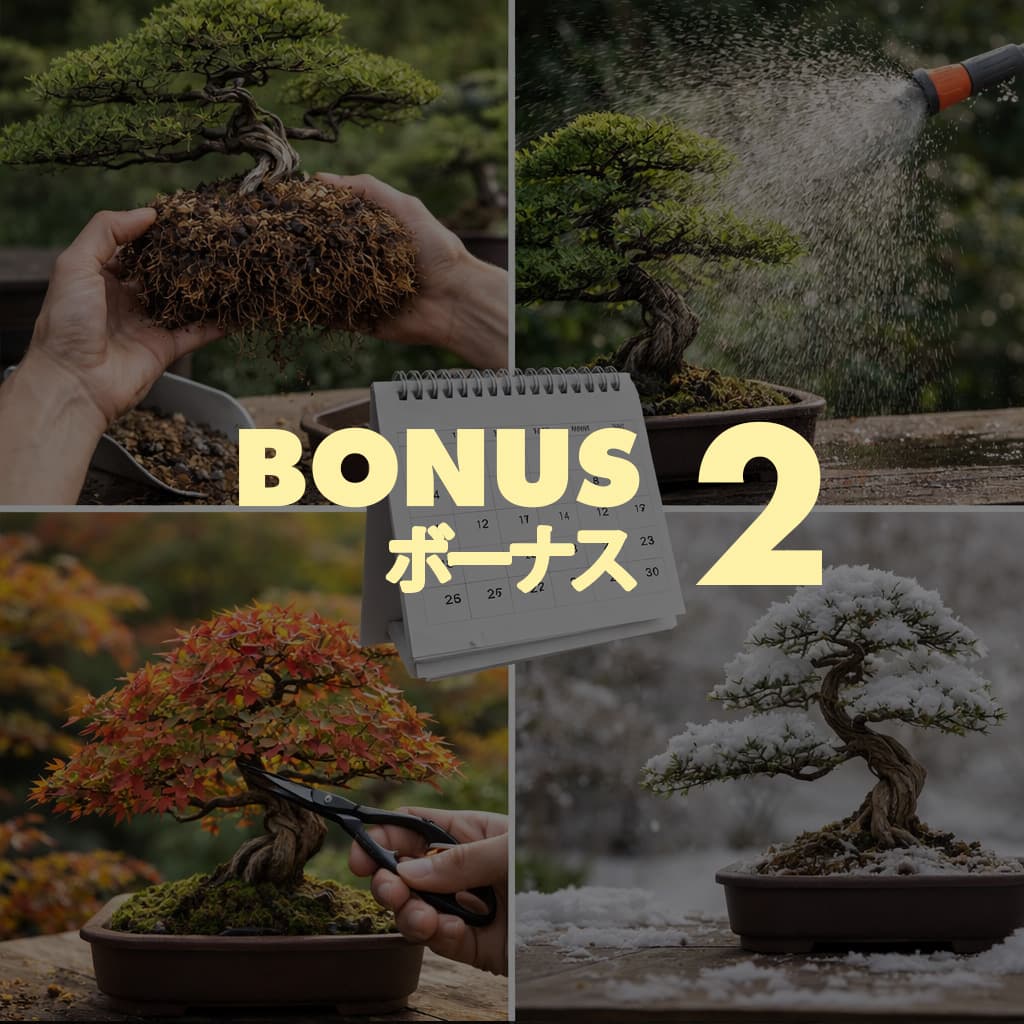
- ✦ Spring: When to repot, fertilize, and let your tree explode with new growth
- ✦ Summer: Watering adjustments, sun protection, and the best window for wiring
- ✦ Autumn: Reducing fertilizer, preparing for dormancy, enjoying fall color on deciduous species
- ✦ Winter: Cold protection, dormancy care, and indoor overwintering for tender species
The Bonsai Aftercare Guide
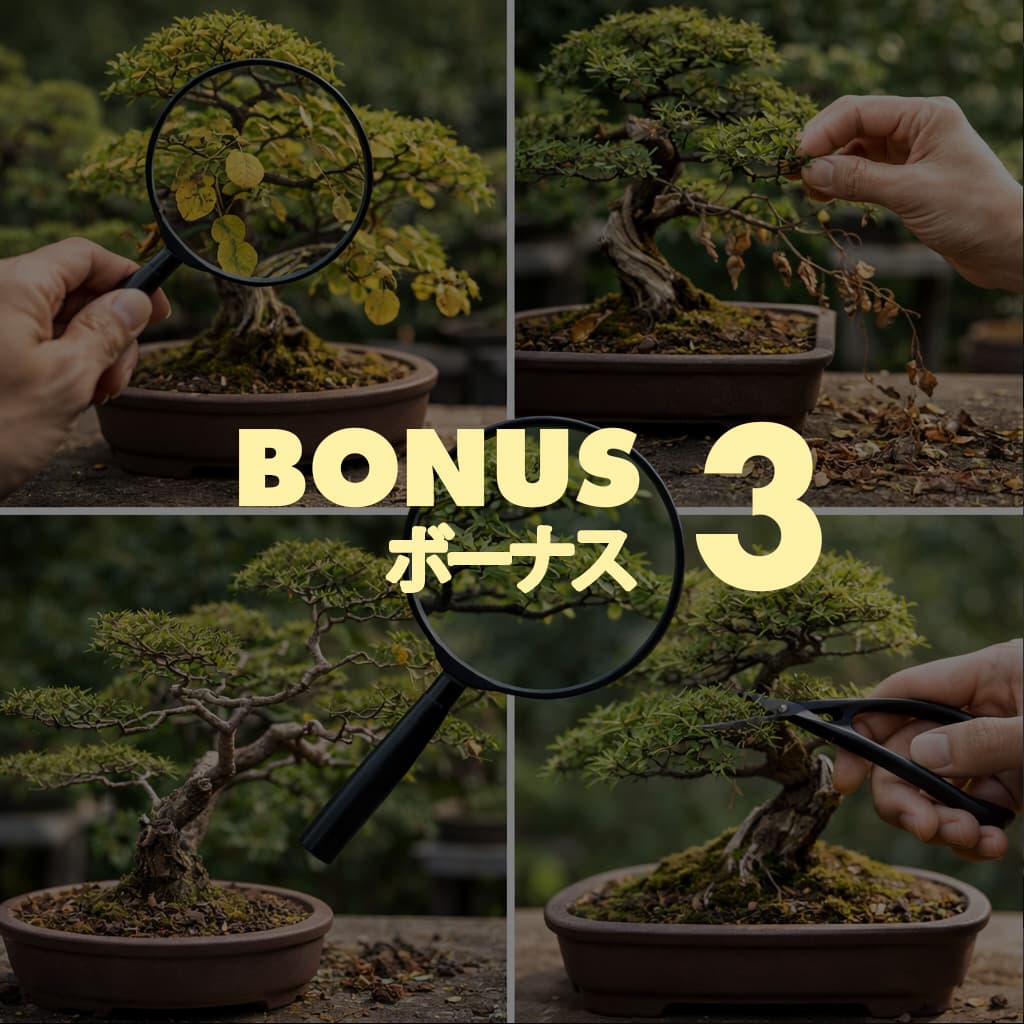
- ✦ Yellowing leaves? It's not always overwatering: the 4 possible causes and fixes
- ✦ Dropping leaves suddenly? Seasonal, stress, or dying: how to tell the difference in 30 seconds
- ✦ Leggy, stretched growth? The light and pruning adjustment that restores compact shape
- ✦ 15+ photo-matched symptoms with clear diagnosis and step-by-step solutions
Here's everything you get:
Now Only $47
90-Day Money-Back Guarantee
🔒 Secure payment 🔒
P.S. If the next page doesn't load... I'm sorry, but the deal has ended!
One last thing...
Order today and you also get:
Bonsai Styles & Display Guide

- ✦ Formal Upright (Chokkan) the classic straight trunk, perfect symmetry. The most forgiving style for first-timers
- ✦ Informal Upright (Moyogi) gentle S-curves that mimic how real trees grow in nature
- ✦ Slanting, Cascade & Semi-Cascade dramatic styles that add movement and depth to any display
- ✦ How to choose the perfect pot glazed vs unglazed, proportion rules, and color theory
Frequently Asked Questions
None at all. This course is built for complete beginners, including people who've killed every houseplant they've owned. Module 1 starts by matching you with the right tree for your specific environment and teaches you the exact care routine to keep it alive from day one.
Under $35 total. A starter tree ($12-15 from any nursery or online), a pair of shears ($8-12), and some aluminum bonsai wire ($5-10). The course includes a complete shopping guide with links. You do NOT need expensive Japanese tools or a premium specimen tree.
Yes. Module 1 walks you through exactly which species to pick based on your climate, light, and whether you're growing indoors or outdoors. It also includes a shopping guide with specific links so you know exactly where to buy your first tree and what to look for.
Yes, with the right species. Tropical species like ficus, Chinese elm, and jade thrive indoors year-round near a bright window. The course covers both indoor and outdoor species and helps you choose based on your living situation and climate. You do not need a garden.
Yes. Bonsai is practiced on every continent. There are species that thrive in tropical heat, cold winters, dry climates, and everything in between. The course helps you pick the exact species that fits your specific environment — whether you're in Scandinavia, Southeast Asia, or anywhere else.
Daily care is 2-3 minutes: checking soil moisture and watering when needed. Pruning and shaping sessions happen every few weeks and take 15-30 minutes. It's one of the lowest time-commitment hobbies that still feels deeply rewarding.
Your first pruning session creates a dramatic transformation, often within the first weekend. Going from "overgrown nursery plant" to "that's clearly a bonsai" can happen in one afternoon with the right cuts. Deeper refinement builds over months and years, but the initial "wow" moment is immediate.
Your FIRST pruning session transforms a bushy plant into something that's clearly a bonsai. That happens in one afternoon, not one decade. The "holy cow, I made that" moment? That's day one. Every week after, your tree shows you something new.
The Troubleshooting Guide covers every warning sign so you can intervene before it's too late. But honestly, even masters lose trees. It's part of learning. That's exactly why we start you with affordable nursery stock ($12-15). A dead $12 tree is a lesson, not a disaster. And the next one will be better because of what you learned.
90-day money-back guarantee. Try the entire course. Pick your tree. Make your first cuts. If you don't love it, email us within 90 days and we'll refund you in full. No questions asked. No hoops.
Instant access to our private course platform. All video lessons and downloadable PDFs organized by module. Watch on any device: phone, tablet, or computer. Lifetime access, so go at your own pace. There's no schedule and no expiration.
Yes. Payments are processed through Stripe, the same secure payment platform used by millions of businesses worldwide (including Amazon, Google, and Shopify). We never see your card details.
Email us at hello@thebonsaipath.com and we'll get back to you as soon as possible.
Here's everything you get:
Now Only $47
90-Day Money-Back Guarantee
🔒 Secure payment 🔒
P.S. If the next page doesn't load... I'm sorry, but the deal has ended!
"In a world that demands speed, bonsai asks you to slow down. And in that slowness, you find something you forgot you had."
— Keiko Murakami, founder of The Bonsai Path